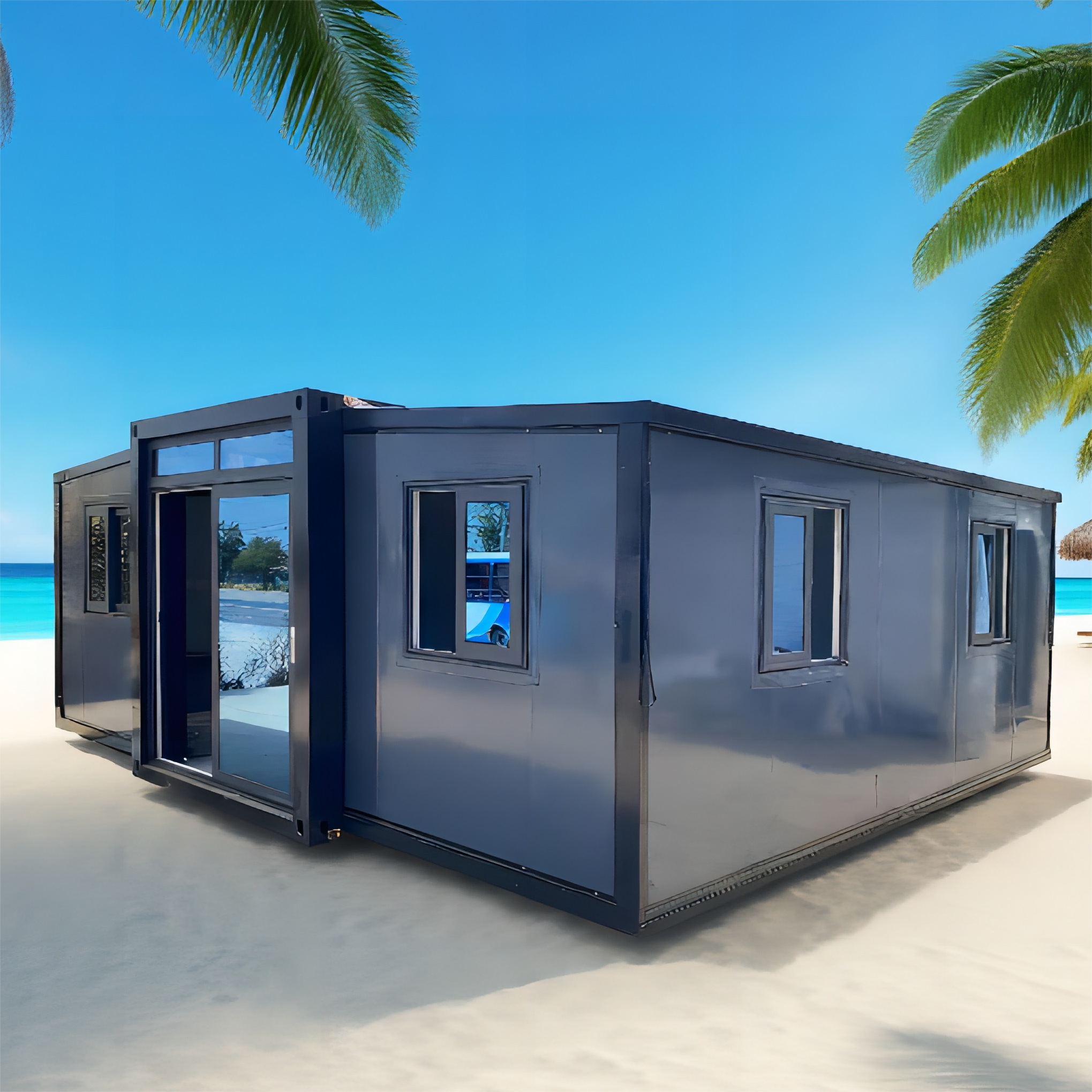
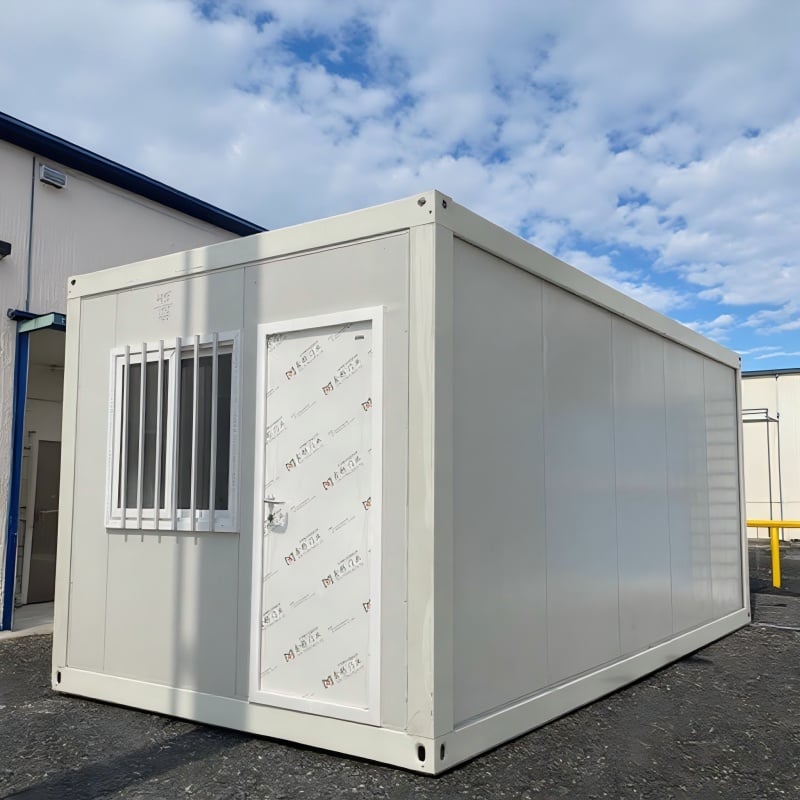
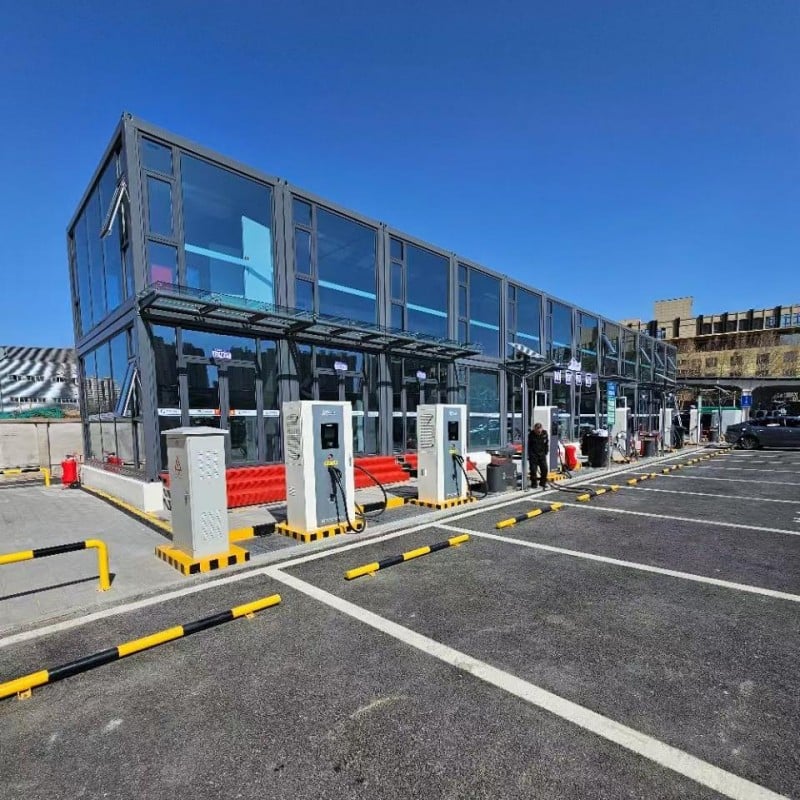
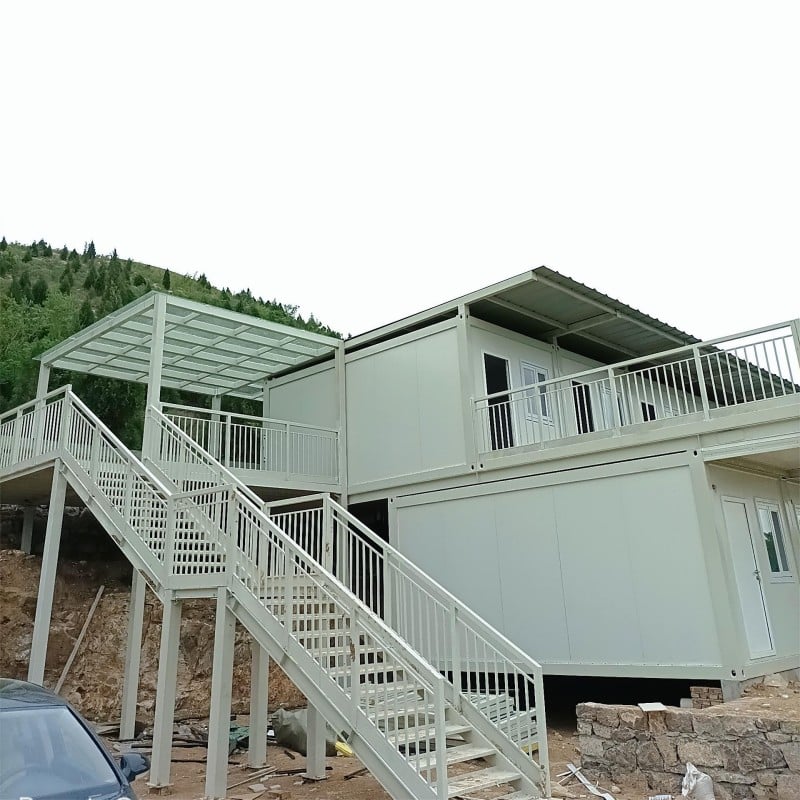
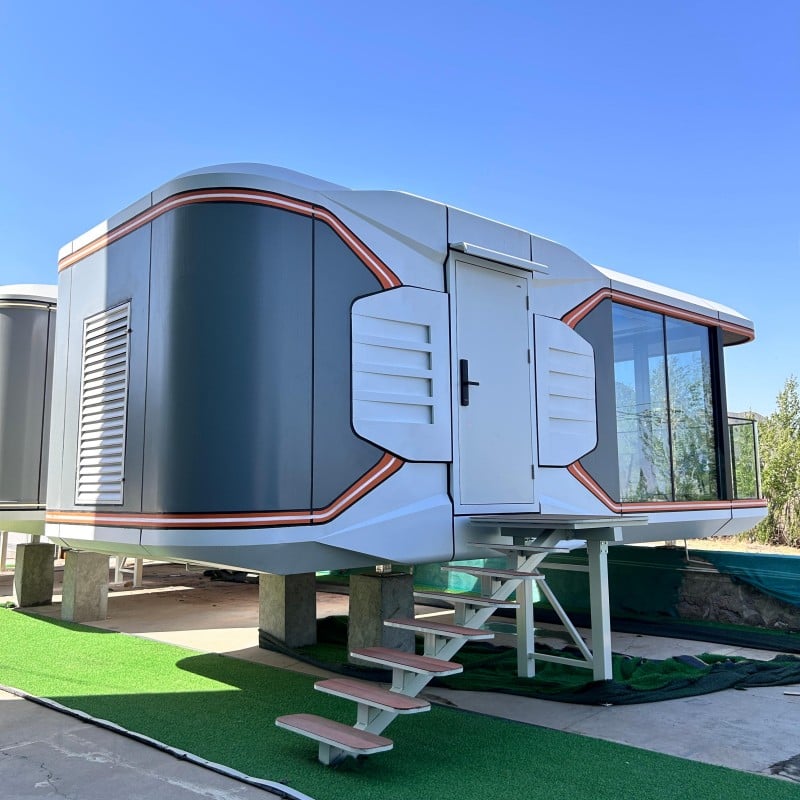
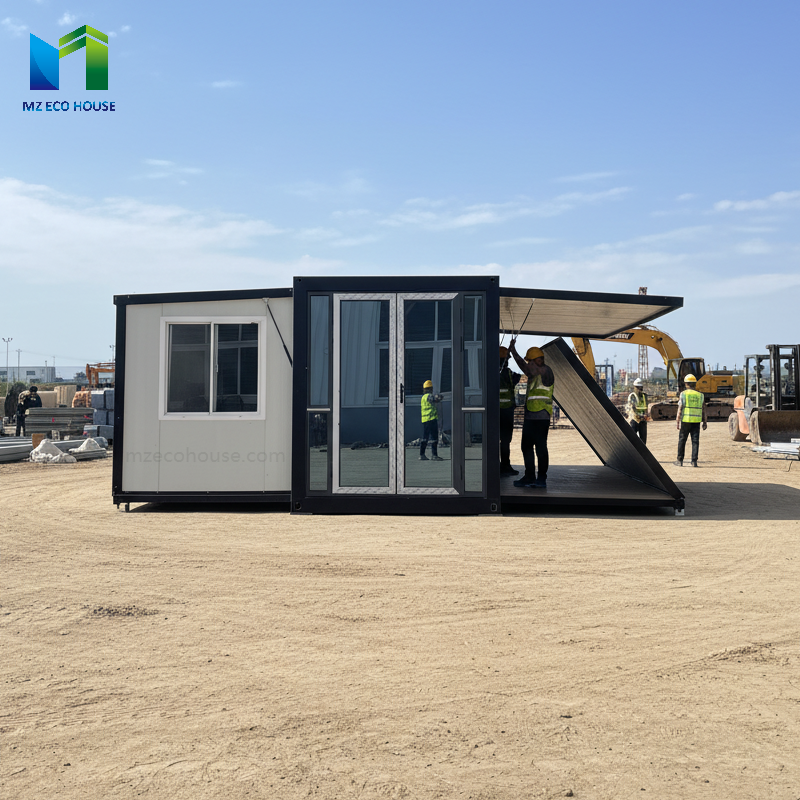
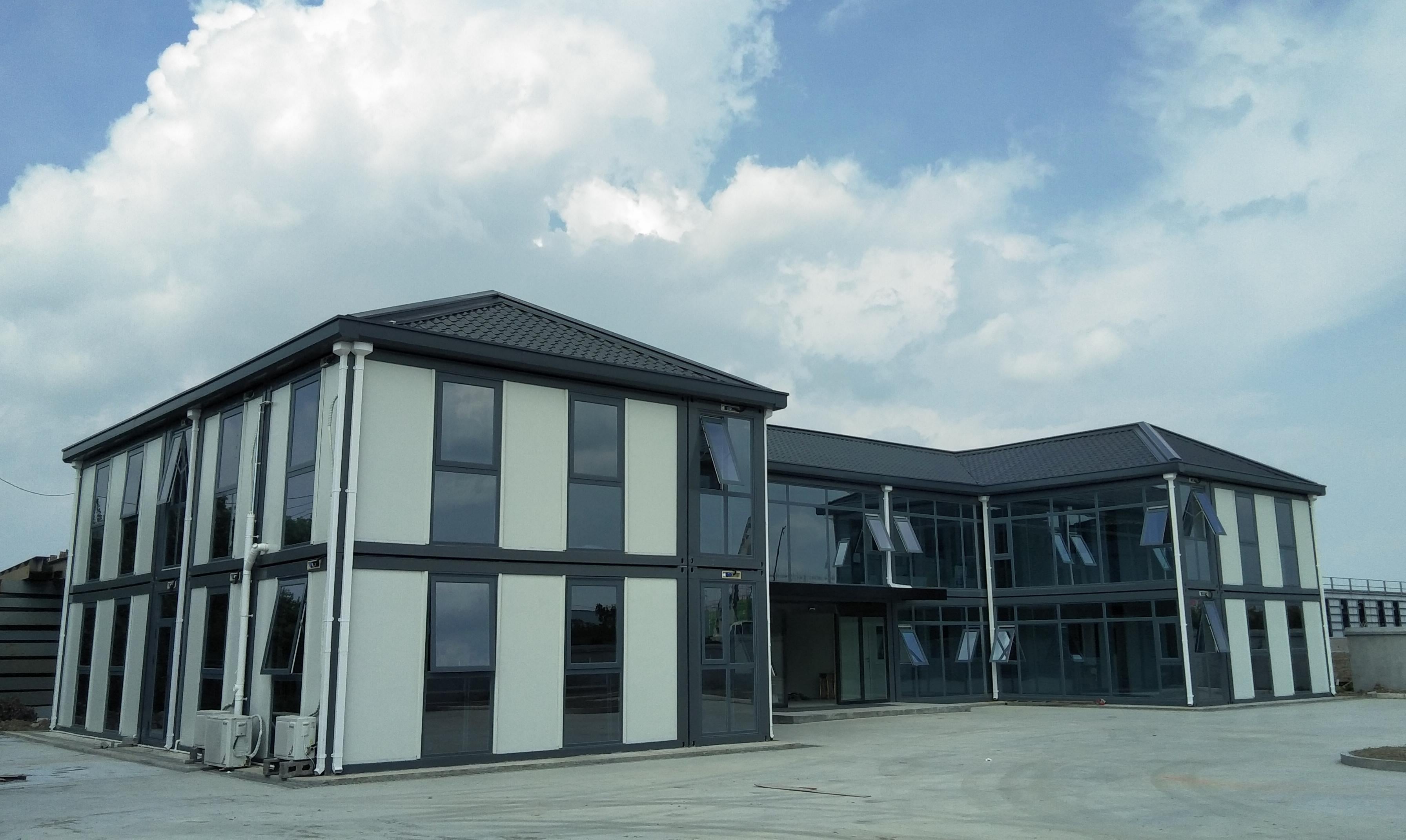
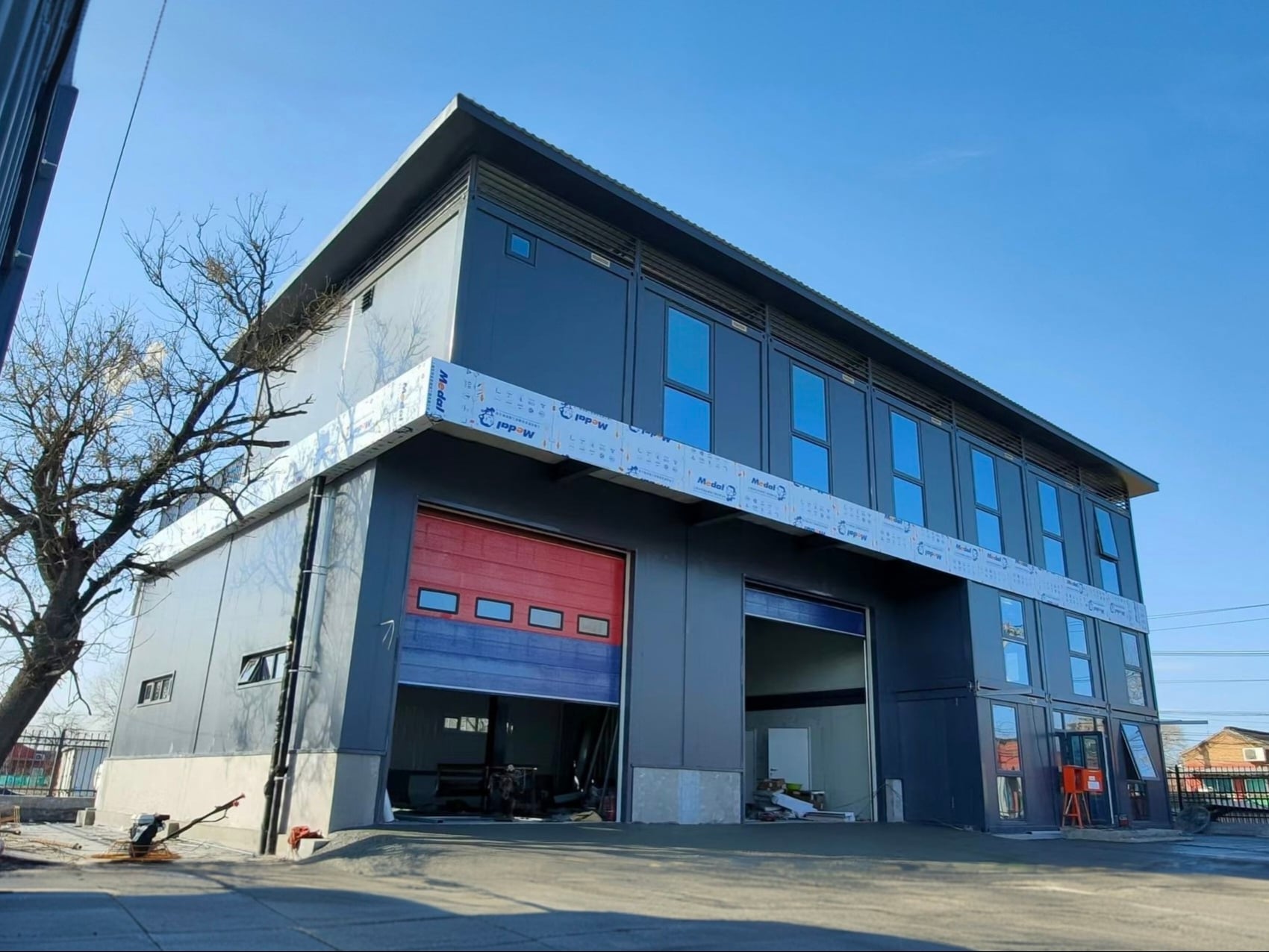
Yes, flat pack container houses can be safely stacked up to 3 floors high.
Unlike folding container houses, which are typically limited to 2 floors due to their hinged structure, flat pack container houses are built with a heavy-duty steel frame that allows for vertical stacking without compromising safety or stability.
In fact, with proper engineering and foundation work, some flat pack models can even reach 4 floors – but 3 floors is the standard recommendation for most residential and commercial applications.
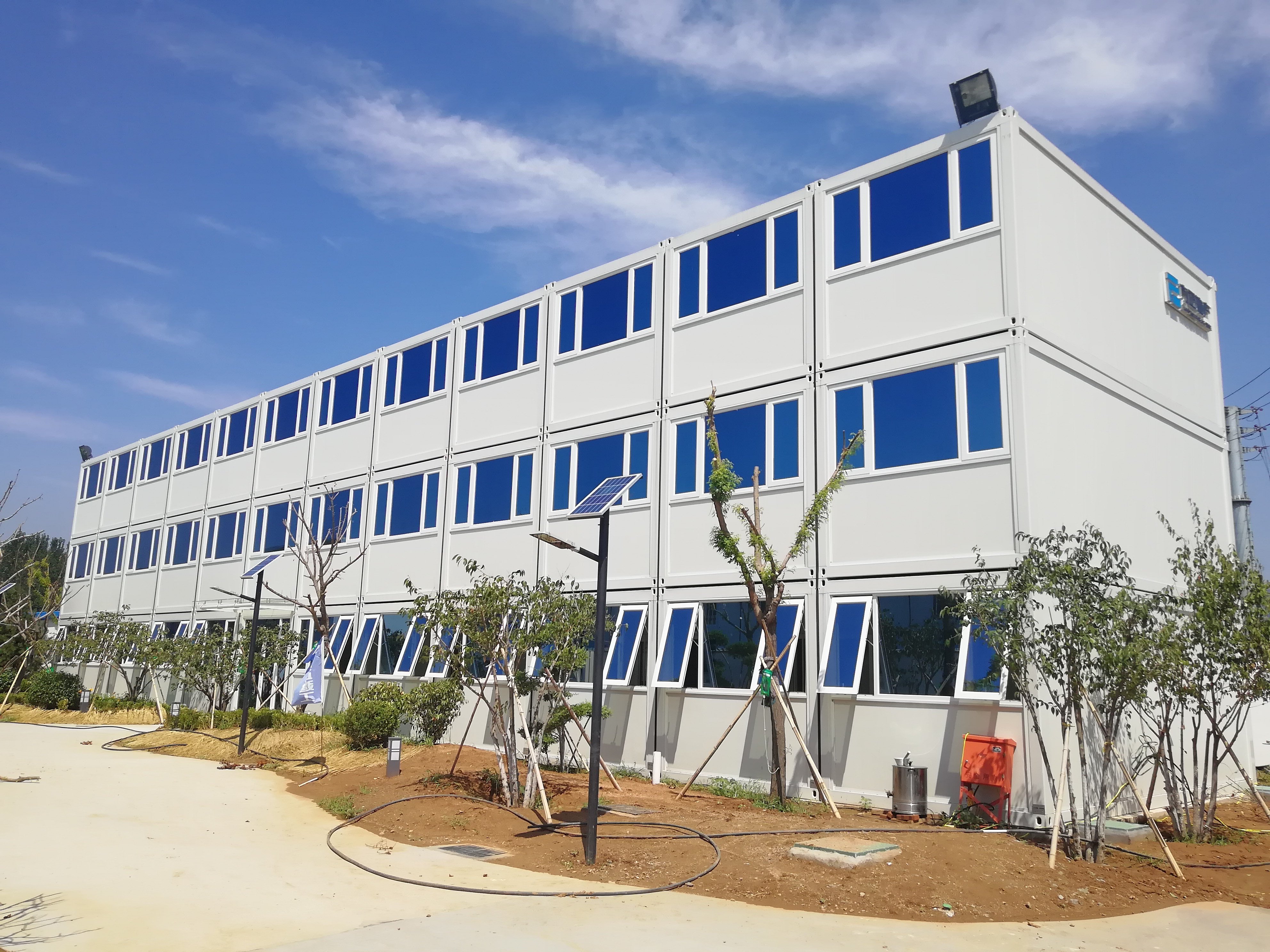
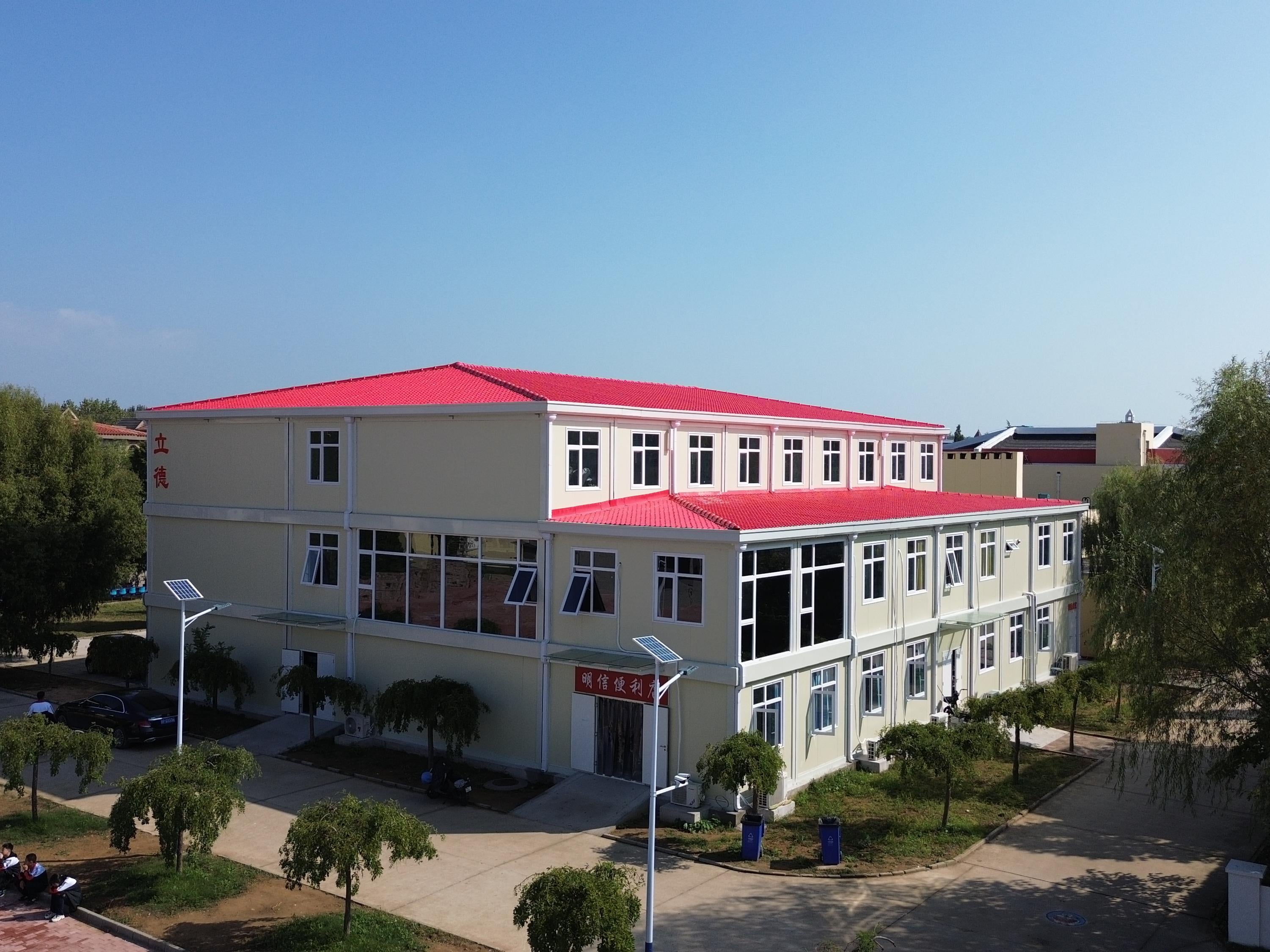
Each flat pack unit is built around 4–6 reinforced steel corner columns. These columns bear the vertical load and transfer it directly to the foundation. When stacking, the columns of the upper unit align perfectly with those of the lower unit, creating a continuous load path.
Special twist locks and corner castings are used to lock stacked units together. These are the same locking mechanisms used in standard shipping containers – proven reliable for decades of sea freight stacking.
Unlike folding houses with lightweight frames, flat pack units feature welded rectangular steel tube frames for both the roof and floor. These frames are designed to support the weight of additional floors.
The sandwich panel walls are fitted between the steel columns, not replacing them. This means the walls are non-load-bearing – they provide insulation and enclosure but do not carry the weight of upper floors.
Stacking flat pack container houses is not complicated, but it does require proper preparation. Here‘s your pre-stack checklist:
For 2 floors: Concrete strip foundation or compacted gravel pad
For 3 floors: Reinforced concrete slab (minimum 150mm thick with rebar)
Always have a local structural engineer review your stacking plan. Soil conditions, wind loads, and seismic activity vary by location.
Use twist locks designed for container stacking – budget-grade connectors are not suitable for 3-floor applications.
Stacking requires a small crane or boom lift. Unlike folding container houses that can be stacked manually, flat pack units need mechanical lifting for upper floors.
Accessing upper floors requires external or internal stairs. Prefabricated steel staircases can be bolted directly to the container frame.
| Feature | Flat Pack Container House | Folding Container House |
|---|---|---|
| Maximum stackable floors | 3–4 floors | 2 floors |
| Load-bearing structure | Steel columns + frames | Hinged panels (limited strength) |
| Inter-floor connectors | Twist locks + corner castings | Basic bolts only |
| Stability at height | Excellent | Moderate |
| Engineering required | Minimal for 2 floors; recommended for 3+ | Always required for 2 floors |
Verdict: If you need more than 2 floors, flat pack is your only reliable option.
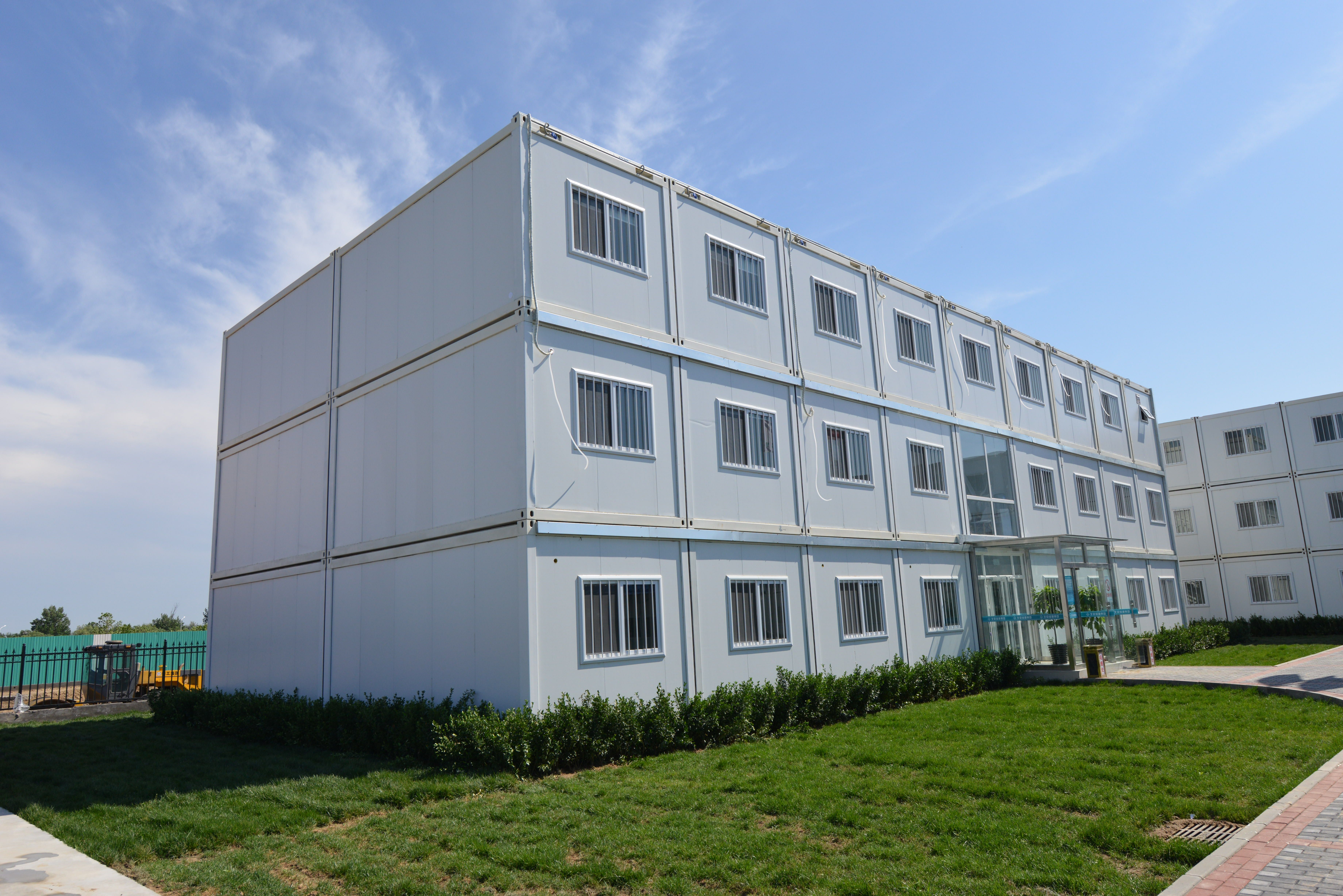
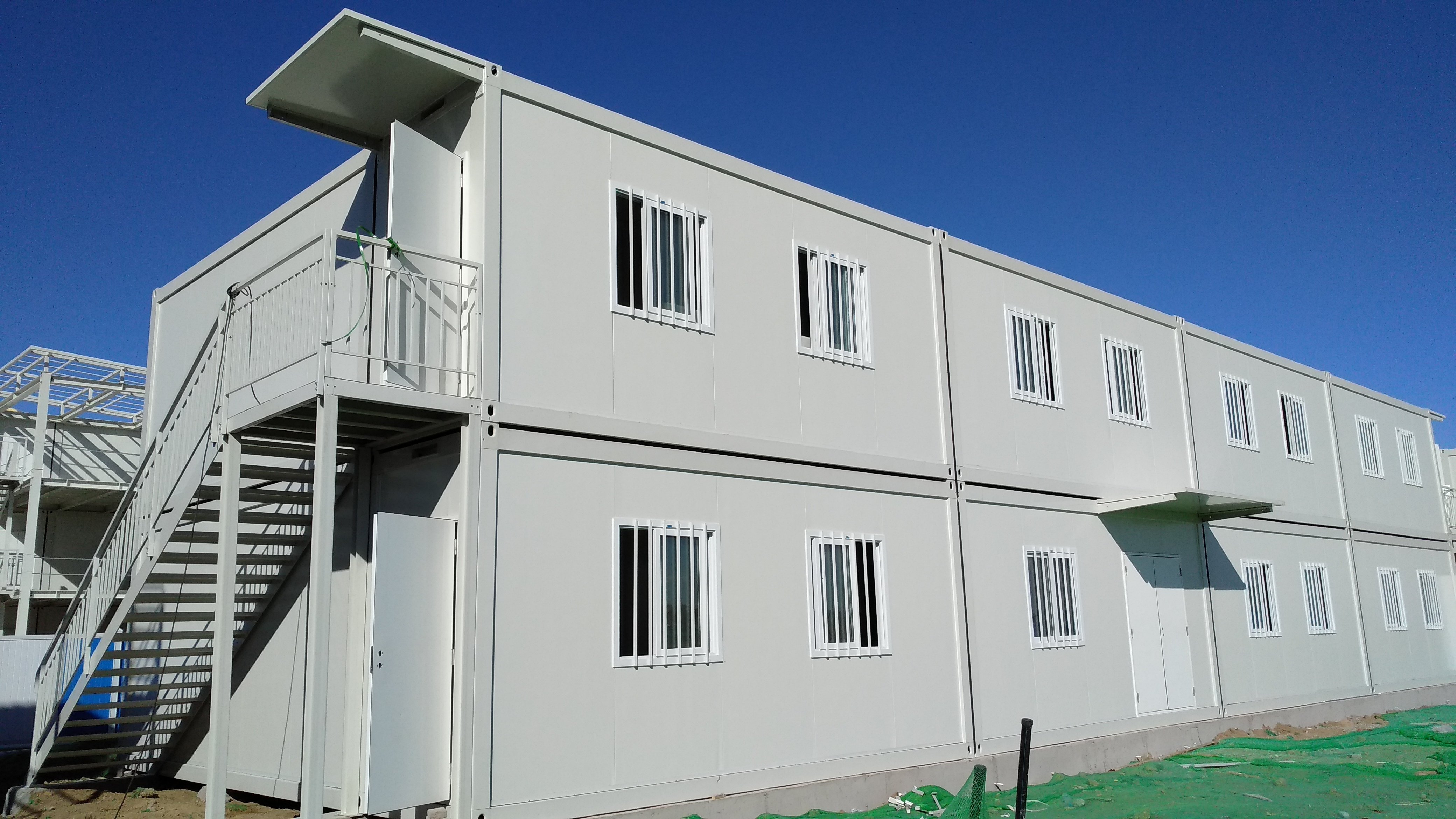
No. The bottom unit‘s steel columns are designed to carry the load of up to 3 floors. The walls carry zero weight – all compression goes through the columns to the foundation.
No. Wall panels are non-load-bearing. The same 50mm or 75mm sandwich panels work on all floors.
Yes, but it‘s not quick. Disassembly takes 1–2 days with a crane. For frequent relocation, folding container houses (not stackable) or single-floor flat packs are better suited.
In most jurisdictions, yes. Any structure over 1 floor typically requires a permit. Always check local regulations before stacking.
Stacking is not always the best solution. Consider alternatives if:
Poor soil conditions – clay, sand, or high water table may require expensive deep foundations
High wind zone – locations with cyclones or hurricanes (above 120 km/h) are safer with 1–2 floors
Frequent relocation – stacking adds disassembly time
Budget constraints – 3 floors require stronger frames (+15–20% cost compared to 1-floor units)
Stacking flat pack container houses up to 3 floors is not only possible – it‘s a smart way to maximize your land use without increasing your shipping footprint.
Whether you‘re building a multi-story home, an office building, or a worker dormitory, flat pack‘s steel frame construction gives you the vertical flexibility that folding houses simply cannot offer.
Key takeaways:
✅ 3 floors is safe and standard for flat pack units
✅ Steel columns, not walls, carry the load
✅ Requires reinforced foundation and twist locks
✅ Ideal for permanent or semi-permanent projects
❌ Not recommended for high-wind zones or frequent relocation
If you‘re planning a multi-floor project, we can help you design the right configuration.
📧 Email us: [email protected]
📐 Request a custom quote for 2-floor or 3-floor stacking
 Hot News
2025-07-15
2025-07-17
 EN
EN