Home > News > Industry News
Today's homes need to keep up with all sorts of life changes, whether someone starts working remotely full time or grandparents move in for good. That's where mobile expandable prefab houses come in handy. These buildings use modular sections that can be added as needed, so families don't have to tear everything down when their situation changes. According to figures released last year by the housing sector, people who opt for this kind of adaptable prefab housing typically spend around 20 percent less than those going through standard renovation processes when they want extra room for things like home offices or accommodating older family members. What makes these structures so flexible includes several important design elements:
This staged expansion approach lets families invest incrementally without overextending budgets upfront.
Leading manufacturers now offer factory-built modules with telescoping roofs, sliding partitions, and expandable floor systems. These innovations enable spatial adjustments in days rather than months:
| Feature | Traditional Renovation | Prefab Expansion |
|---|---|---|
| Time to add bedroom | 3–6 months | 7–14 days |
| Structural disruption | High (dust, noise) | Minimal |
Collapsible decks and retractable stairs further maximize usability in compact configurations while preserving expansion readiness.
The Carter family’s 2016 starter home (2 modules, 640 sq ft) underwent three expansions:
By opting for prefab expansions instead of traditional additions, they avoided $38k in labor costs and reduced construction waste by 62% compared to site-built alternatives. Their home now accommodates four residents across 1,280 sq ft while maintaining energy efficiency ratings above LEED Silver standards.
Today's mobile expandable prefab homes make good use of vertical space and movable walls to separate different parts of the house while still making efficient use of available floor area. The way designers organize these spaces often includes split levels and sliding doors that change based on what people need throughout the day. Think about sleeping areas positioned above where folks hang out during the day, desks that can be folded away into walls when not needed, and kitchen islands that double as places to eat meals. According to research from IDW Design last year, families who live in homes designed this way tend to feel much happier about their living situation than those stuck with conventional floor plans, with some reporting almost twice the satisfaction level.
When expandable structures meet transformable furniture, small spaces become surprisingly adaptable. Think sofa beds that stash extra stuff underneath, dining tables that stretch when needed, and those fold-out desks attached to walls. These pieces let rooms switch from office to living area to bedroom without missing a beat. Some cutting edge models even feature special ceiling tracks strong enough to hold privacy screens or floating shelves. This keeps the room feeling open but still allows people to rearrange things as their needs change throughout the day.
Innovative storage integration distinguishes high-performance compact living units:
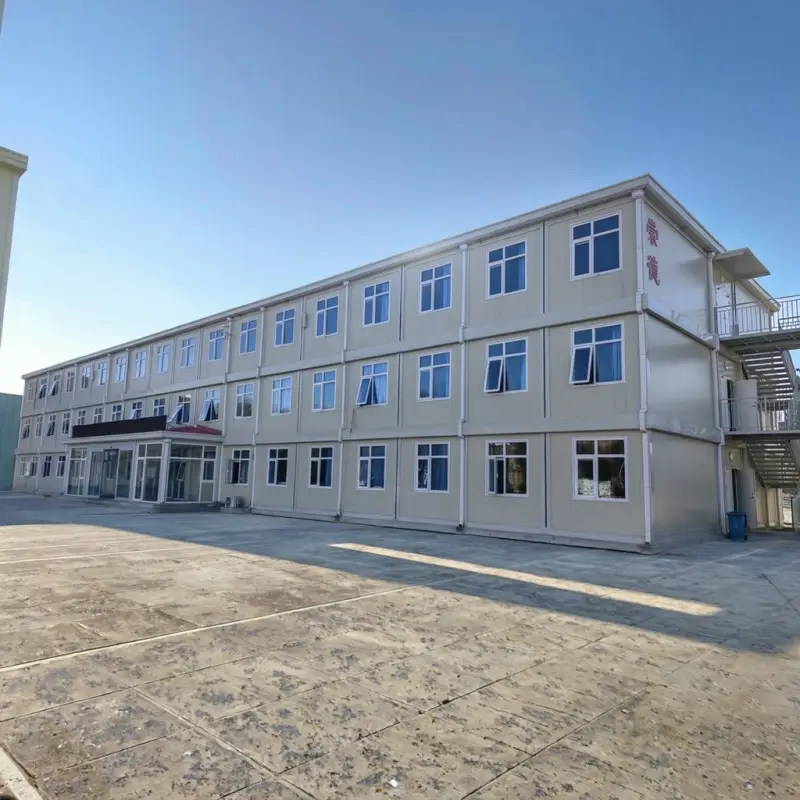
These houses offer cost efficiency, environmental benefits with reduced material waste, and adaptability to changing lifestyle needs. They allow for reconfigurable layouts and are more affordable than traditional construction.
Modular systems enable phase-built expansions for additional bedrooms or offices, allow for customization, and provide financial flexibility through incremental upgrades.
Prefab homes reduce construction waste by about 30% compared to traditional methods because components are manufactured in precise factory settings, minimizing leftover materials.
Yes, leading manufacturers offer modules that include customizable features such as telescoping roofs, sliding partitions, and expandable floor systems to adapt to evolving household needs.
Prefab expansions generally cost 40% less than site-built projects, with faster assembly times and reduced labor costs due to factory-controlled environments.
 EN
EN