Home > News > Industry News
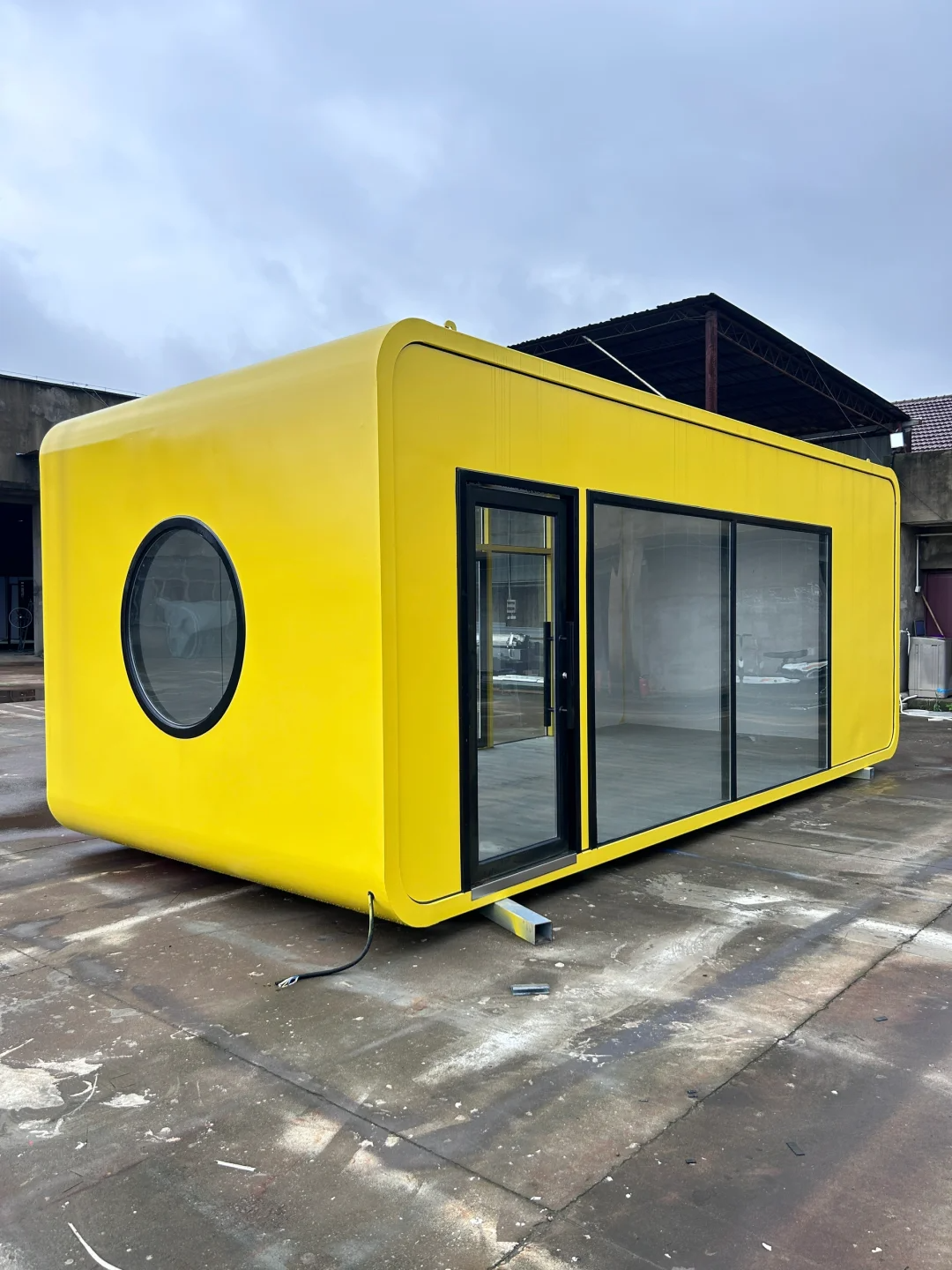
Container homes that can be folded down take up about 40% less space when being shipped than regular ones thanks to their accordion-like folding system. Because they're so much smaller, shipping companies can fit around 60 to 70% more of these homes on each truck trip, which means less fuel gets burned for every housing unit that actually reaches its destination. A recent report from Infini Research in 2024 shows that when manufacturers stick to standard foldable designs, there are roughly 33% fewer empty trucks going back after deliveries because these homes stack nicely in both directions. Getting rid of fixed interior parts while transporting also helps with figuring out how heavy things really are based on their size, making the whole process even more efficient.
The interlocking corner castings on collapsible units enable 3-high secure stacking in storage yards—double the density of traditional container housing. Terminals using automated stacking cranes report 30% faster inventory turnover through dynamic vertical organization. During seasonal demand fluctuations, folded units occupying 80% less ground space simplify yard management.
A 2023 deployment of 120 collapsible medical clinics across Sub-Saharan Africa demonstrated 19.8 metric tons of CO2 savings versus conventional units. The reduction stems from three key factors:
Data from Obrecht's 2017 container design study confirms these space-efficient units generate 17–23% lower emissions per lifecycle than fixed-container alternatives when accounting for transportation impacts.
Collapsible container homes use those tough military grade rotating hinges along with slide and lock systems that cut down on stress points by about 58% when compared to regular folding setups according to some engineering tests last year. What makes these homes special is how they let the side walls fold inward like an accordion but still keep everything sealed tight against the elements. They manage to shrink down to just one fourth of their original size without letting rain or wind get through. Industry research from 2023 showed something interesting too containers featuring those double wing wall designs actually experienced around 40% less wear and tear after going through multiple folding sessions. Makes sense really since better materials mean longer lasting structures for folks who need portable housing solutions.
The manufacturing sector relies on special aluminum alloys originally designed for airplanes (specifically the 6082-T6 grade) along with advanced fiber reinforced plastics. These materials can handle thousands upon thousands of folding cycles without failing, all while maintaining an empty weight below 3,800 pounds. When compared to old fashioned steel shipping containers, this combination delivers around 72 percent better strength relative to weight, which makes a huge difference when it comes to transportation costs and fuel consumption. For added durability, manufacturers incorporate impact resistant corner castings that meet ISO 1496-1 standards. This ensures the containers stay structurally sound even when stacked together at force levels reaching up to 9 times gravity's pull during transit.
Using advanced computer aided design, engineers have managed to get panel thickness just right at around 2.3 millimeters give or take 0.05mm. This allows panels to fold easily while still holding impressive weight capacities of up to 64 thousand pounds. The way floor channels lock together with roof cross members creates solid load paths throughout the structure. Even when folded, these containers meet all standard ISO requirements for shipping containers. Independent tests by outside labs indicate something pretty remarkable too. After simulating real world conditions over fifteen full years, the structures retained nearly 98.6 percent of their original strength characteristics. That kind of durability makes them ideal for long term storage solutions where reliability matters most.
Collapsible container homes revolutionize rapid deployment, with assembly times slashed to 48–72 hours compared to 6–12 weeks for conventional buildings. This efficiency stems from pre-engineered components that eliminate 83% of on-site construction steps like bricklaying or concrete curing (Modular Building Institute 2023).
A crew of three can erect these structures using standard tools, bypassing the heavy machinery required for traditional builds. This simplicity reduces labor costs by 40–60% while enabling installations in logistically challenging areas like mountainous terrain or flood zones.
When typhoons displaced 15,000 residents in Southeast Asia (2023), collapsible units provided shelter 11 days faster than temporary housing alternatives. Their stackable design allowed 50 units per truckload versus 8 for traditional options, optimizing limited transportation access.
Recent analyses of mobile infrastructure show collapsible container homes reduce camp setup time by 60% for mining exploration teams. Medical NGOs similarly leverage this portability, deploying fully equipped clinics to refugee sites within 72 hours of crisis onset.
Container homes that can collapse down save tons of space because their walls are built to be both strong and able to change shape inside. People living there can actually turn what starts as just a small 160 square foot studio into something with two bedrooms within around three hours thanks to sliding walls and work areas that fold away. The dining tables have multiple hinges so they stack right up against the walls when nobody needs them, and those shelves people put stuff on also act as separators between rooms. According to some studies from last year looking at how comfortable these homes are, this setup manages to keep about 8 out of every 10 feet walkable for folks moving around inside.
The design of these modular homes includes standard connection points throughout walls and utility systems. This setup makes it possible to switch between different functions pretty quickly without needing major changes to the structure itself. Take medical triage centers used in disaster situations as an example. They can easily change from being large open clinics to individual consultation spaces just by moving around some soundproof panels. For businesses, there are commercial versions too. These have fold away display units that let office spaces double as temporary shops when needed. Some companies even report saving money on rent because they don't need separate locations for different purposes anymore.
Engineers reinforce critical load-bearing points while keeping 78% of wall surfaces reconfigurable. Steel-framed sliding panels with integrated locking mechanisms maintain wind resistance ratings up to 120 mph even when moved, as verified by third-party testing labs in 2024. Transformable elements like fold-out staircases use aircraft-grade aluminum hinges rated for 50,000+ operational cycles.
 EN
EN