Home > News > Industry News
The mobile expandable prefab house concept brings together modular construction techniques with spaces that can actually grow when needed. These homes feature different expansion methods including hydraulics, manual cranks, or electric motors which can boost living area anywhere from about 45 percent all the way up to over 250 percent once they arrive at their destination. According to some recent market research from last year, around two thirds of premium models rely on hydraulic systems because people love how easy they are to deploy with just one button press. Meanwhile many folks who live off the grid still prefer going old school with manual expansion systems since they don't need electricity to work properly.
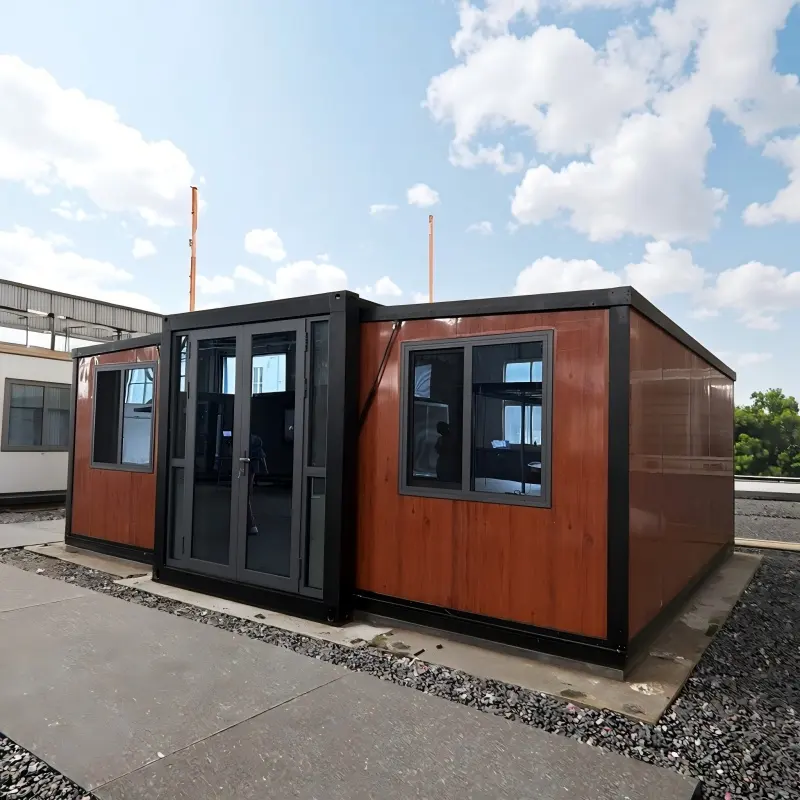
The mobile expandable prefab house redefines portable living by combining military-grade mobility with architectural versatility. Unlike static buildings, these units feature retractable components and chassis-mounted designs that allow relocation to remote sites—from arctic research stations to desert communities—where conventional construction is impractical.
According to a 2024 Global Construction Innovation Institute study, expandable prefab units reduce site preparation time by 63% in mountainous terrain compared to traditional modular builds. Their adaptability stems from key engineering features:
The same design enabling stable installation on Siberian permafrost—demonstrated in the 2023 Northern Lights Observatory project—also supports tropical deployments using elevated, flood-resistant foundations.
Despite conforming to standard 20/40ft container dimensions, these units incorporate advanced mobility features:
This transport-ready design reduces redeployment costs by 41% compared to panelized systems (Modular Building Institute 2023), making one unit adaptable for multiple uses:
Today's mobile expandable prefab homes give people way more freedom when it comes to how they arrange their living space. Homeowners simply move around walls or add extra sections as needed, which means these houses can start as small 20 square meter studios and grow into full blown 100 square meter homes with multiple floors. Looking at what's happening in the market right now, most folks seem to want adaptable spaces rather than rigid floor plans. The numbers back this up too - around two thirds of potential buyers are showing interest in modular designs according to recent projections for 2025. So it makes sense why manufacturers keep pushing modularity as one of their main selling features.
A Southeast Asian eco-resort recently installed 12 modular units across mangrove forests and hillside terrain. Each 35m² home includes:
The mobile expandable prefab house concept cuts down on building time significantly, sometimes cutting it in half when compared to traditional construction approaches. When everything gets made in a factory setting, there's no waiting around for bad weather to pass, which saves a ton of time. Plus, workers get used to putting together standard parts over and over again, so they become much faster at their jobs. What really makes these homes special is that while crews are laying the groundwork outside, the actual house components are being built inside the factory at the same time. This parallel approach means many projects wrap up within just a few weeks instead of dragging on for months. Looking at industry reports from last year, most studies show that going prefab typically brings down total expenses somewhere between 20% and 30%. The savings come mainly from wasting less materials during construction and having smoother operations throughout the entire building process.
When there's an emergency situation or when people need temporary shelter fast, these expandable prefab units can be put together anywhere from three to five times quicker than regular buildings take. The whole setup process happens pretty much within two days once everything arrives because all the parts are pre-made and ready to go. Plus, they come packed inside shipping containers which makes transportation straightforward, and utilities just slot into place without needing complicated hookups. No waiting around for those lengthy inspections that usually hold up traditional construction projects. That's why many organizations turn to these modular solutions during disasters or when setting up housing for workers out in remote areas where time is money.
More and more cities and non-profit groups are turning to those expandable mobile homes when dealing with emergencies where money matters. These units don't need big construction equipment either, which makes them super easy to adjust depending on what's needed at the moment. Some folks have one tiny shelter for a single person, others build whole complexes with multiple floors. According to research published last year in the field of portable living spaces, these prefabricated options actually cut down the price tag for temporary housing by around 35 cents for every square foot compared to traditional methods. And get this they stand up just as well against wear and tear as regular buildings do too.
 EN
EN