Home > News > Industry News
People who lose their homes when disaster hits really need somewhere safe to stay within about three days before things get even worse. That's where those emergency folding containers come in handy. They start off as boxes packed flat but can be turned into actual living spaces within hours. These aren't your regular tents though. The containers have proper insulation, real doors that actually lock, and solid bases that let them withstand multiple uses which matters a lot when communities are recovering for months on end. Logistics experts have noticed something interesting lately too. Modular shelters make sense because they all fit together the same way, so transporting them isn't such a headache anymore. Plus, getting hundreds of these ready-made units to people in crisis zones happens much faster than trying to build everything from scratch.
We've seen climate related disasters go up about 83 percent since the turn of the century according to CRED's latest report from 2023. This has pushed both government agencies and non profit organizations toward finding better solutions for temporary housing needs. Looking ahead, experts predict the market for modular emergency housing will expand at around 7.9% each year until 2030. Most of these new structures are going to be deployed in Asia Pacific regions where nature throws around typhoons and earthquakes pretty regularly. The change we're seeing now comes after learning hard lessons from previous disasters when traditional aid approaches simply couldn't provide enough sturdy shelter for everyone affected. Some studies show that using those foldable container units instead of regular tents can cut down on disease outbreaks following disasters by roughly 34%. That makes sense because people aren't living in damp, moldy conditions anymore which helps keep them healthier while they wait for permanent homes.
The shelters come with pre-made steel frames and walls that snap together, so regular folks can put up whole camps of 20 units within just eight hours flat. Back in 2023, there was this test run in Mozambique where they found these modular setups saved about two thirds of the work compared to old fashioned building techniques. Everything gets labeled either by color or number codes, making it super easy to sort through all the parts. This really helps out big time during disasters such as those floods in Bangladesh last year when nearly three quarters of their roads and buildings got washed away. The way these shelters are built means no fancy welding equipment needed either. Manufacturers design them so everything connects the same way everywhere, which makes putting them together fast even if electricity and other services stay down for days at a time.
The special joints and light composite panels used in these emergency folding containers mean they can be put together in just over two hours now, which is way faster than the old modular setups by about 63% according to last year's housing report. Because everything comes flat packed, we can actually fit 24 of these units onto one big delivery truck. That makes a huge difference when disasters strike since rescue teams can get out more than 150 shelters on the ground within two days after officials declare an emergency situation.
Units expand from a transport volume of 20m³ to 90m³ of usable space using telescoping walls and dual-axis folding mechanisms. Post-deployment expansion adds 2–3 rooms without additional structural supports, accommodating critical needs such as medical triage areas or family privacy in densely populated camps.
Just three days after the massive 7.8 magnitude quake hit, relief workers had already set up around 1,200 foldable container homes throughout nine different provinces. According to aid organizations on site, these modular units packed in about four times as many people per square meter compared to regular tents. Most importantly for those living through freezing nights, nearly 92 percent of people inside said they found the insulation good enough to stay warm even when temps dipped below zero. Looking at the bigger picture, experts from the Global Shelter Cluster estimate that using these containers instead of traditional fabric shelters cut down on people having to move again later by almost 80 percent.
Collapsible steel frames and nesting wall panels reduce transport volume by 72% compared to traditional shelters (Bandara et al. 2015). This compact design allows aid agencies to ship three times more units per truckload while preserving structural integrity—critical when deploying 500+ shelters for regional disasters.
Weighing under 1,100 lbs per module and designed for stacking, these units lower last-mile delivery costs by 58% compared to rigid temporary housing (FreightSmart Logistics 2024). Organizations report a 92% success rate in airlifting them to mountainous regions using standard helicopters, significantly outperforming conventional shelters, which achieve only a 35% success rate.
UN procurement data reveals that 83% of new disaster housing contracts now require foldable designs—a sixfold increase since 2015. This transition improves vehicle space utilization and reduces the number of transport trips, cutting global relief logistics emissions by an estimated 41,000 tons annually.
These shelters are built tough with galvanized steel frames and extra strong corner castings that can handle winds blowing at speeds as high as 130 miles per hour according to recent UNHCR reports from the field. The cross bracing and welded connections keep everything stable even when temps swing between minus 22 degrees Fahrenheit and a sweltering 122 degrees, so they work well in places like flood prone areas, dry desert regions, and pretty much anywhere else conditions get rough. Looking at displacement tracking numbers, these structures hold together about 78 percent longer than standard shelters have done over an 18 month period of constant use, which is quite impressive considering how long that actually is in real world situations.
Multi-layer protection systems combine EPDM rubber roofing with silicone-sealed panel joints to prevent water ingress during heavy rainfall exceeding 3 inches. Testing by the Disaster Shelter Coalition (2024) demonstrated resilience under Category 4 hurricane-force winds, thanks to aerodynamic profiles and ground-anchor systems rated for 3,500 lbs of uplift resistance.
A 2024 study of 1,200 shelters in Florida’s hurricane belt found that steel-framed container houses maintained 94% post-storm habitability, compared to 61% for fabric structures. Rigid walls minimize risks from flying debris, while insulated composite panels keep indoor temperatures stable up to 40% longer during power outages (National Emergency Management Association data).
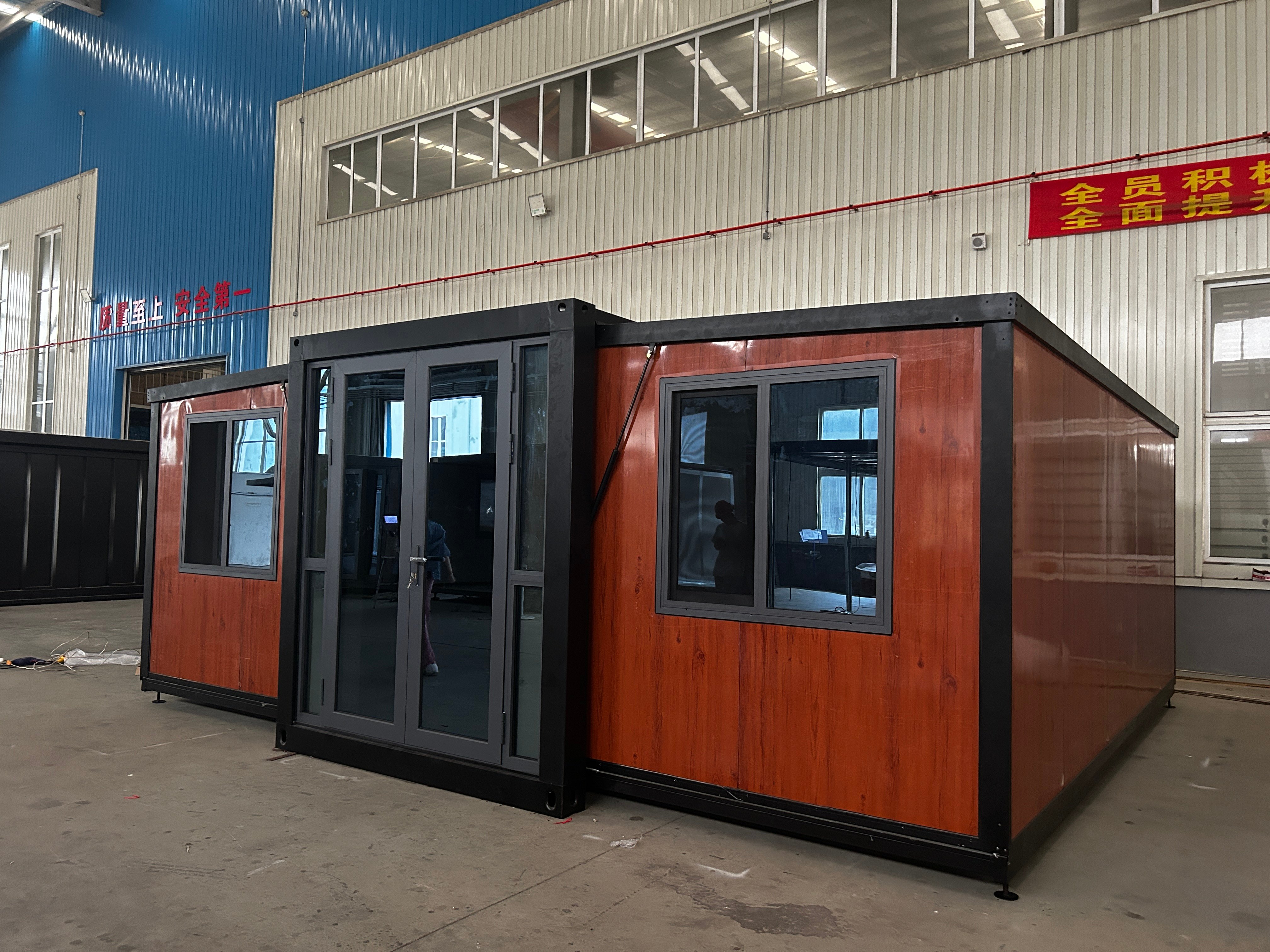
Over five-year deployments, emergency folding container houses incur 60% lower lifetime costs than tent-based solutions (MDPI 2024). Their steel-frame construction supports 7–10 redeployments, far exceeding single-use tents. Modular repair systems also reduce maintenance expenses by 35%, with cost savings amplifying in multi-phase disasters where reusable units eliminate recurring procurement.
Standardized components achieve an 85% material reuse rate across disaster cycles, preventing approximately 8.2 tons of construction waste per unit. Interlocking panels allow targeted repairs instead of full replacements, with field tests in 2023 showing 92% of structural materials remained intact after three deployments.
Leading relief agencies use blockchain-enabled tracking systems to maintain 94% asset visibility across storage hubs. This technology, validated in ROI studies, helps match available container houses with emerging crises while optimizing transport routes to minimize carbon emissions.
 EN
EN