Home > News > Industry News
Steel container houses offer real money savings because they're made using standard manufacturing processes and better logistics planning. The buildings are constructed from the same factory-made steel parts like corner castings, wall sections, and connection pieces. This approach means no need for special custom work, speeds up building times, and makes it easier to manage what needs to be bought. When companies make lots of these modular components, they save around 15 to 20 percent on materials per unit. Buying steel in big quantities gets them about 12 to 18 percent off regular prices too. Waste remains pretty low at under 5 percent overall. Storage costs drop roughly 30 percent when compared to custom built projects since there's less stuff sitting around waiting to be used. Workers get faster at putting modules together over time as well. Studies show repetitive assembly can cut down building time by almost a quarter.
The repetitive nature of detachable container house construction enables consistent quality control, faster training, and predictable scheduling—all critical for budget and timeline adherence. Because every unit shares the same structural DNA, manufacturers avoid costly design revisions and engineering rework common in site-built or one-off modular projects.
The collapsible design is changing how we think about moving things around. When taken apart, these structural parts and walls take up only about 40% of what traditional modular units need. That means transport companies can fit roughly 2.5 times as many housing pieces on each truck. Combine this with smarter routing strategies and shipping costs drop somewhere between 35% and maybe even 50%. At construction sites, there's simply less stuff coming in and much smaller spaces needed for storing materials. The savings here run into the high 30s or 40s percent range for logistics overall. What makes this system work so well? Standard forklifts handle all the heavy lifting instead of expensive cranes. Most contractors report they don't need to rent cranes at all during installation, which cuts down those mobilization costs significantly across most projects.
When Corten steel gets exposed to weather, it naturally creates its own protective rust layer so there's no need for extra coatings or treatments. The special alloy actually builds up a stable oxide coating over time, and interestingly enough, this layer gets stronger rather than weaker when subjected to rain, humidity, or even salt air from coastlines. That makes Corten particularly good for places near the ocean, factories, or anywhere with lots of moisture in the air. Real world testing has shown that buildings made with Corten keep about 94% of their original strength even after spending many years in tough conditions. As long as the foundation work is solid and there's some attention paid to drainage around the property, homes constructed with Corten often last well past fifty years without needing much maintenance beyond maybe touching up some paint here and there instead of completely repainting or replacing sections.
Container houses made from ASTM A588 grade steel have shown remarkable resilience against disasters. This particular type of steel, which meets specifications set by the American Society for Testing and Materials, gives these structures serious strength advantages. When put through their paces, certified models can handle winds blowing over 150 miles per hour and even earthquakes measuring up to magnitude 7.0 on the Richter scale. The secret lies in those sturdy corner posts and reinforced cross members that hold everything together. Third party tests revealed something pretty impressive too these containers actually supported stacking weights reaching 58,000 pounds that's eight times what standard wooden frames typically manage without showing any signs of bending or breaking. And because they use bolted connections instead of welding, the buildings stay sealed tight when moved from one location to another, keeping occupants safe while maintaining all their structural performance characteristics intact throughout multiple moves.
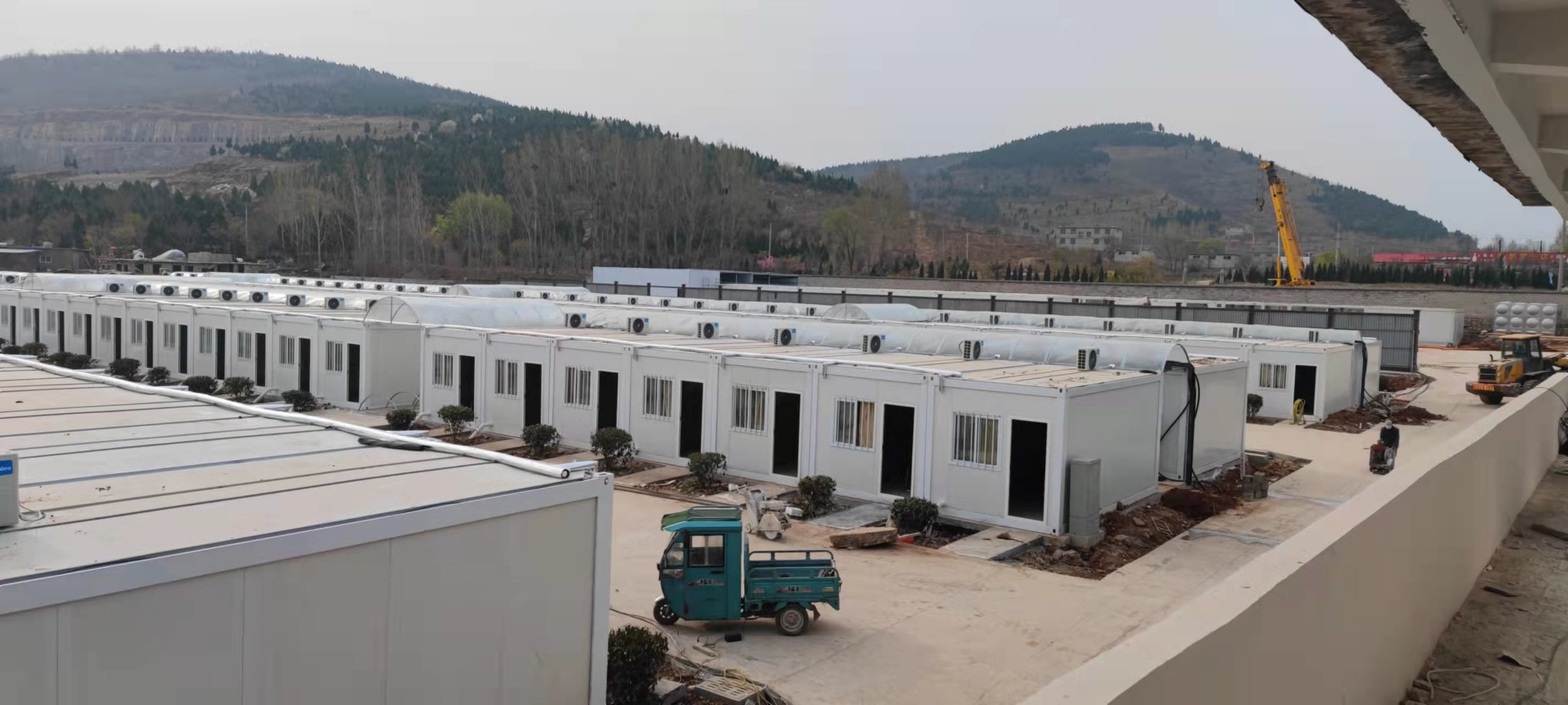
Factory-finished components arrive pre-wired, pre-insulated, and ready for rapid mechanical connection—eliminating weather delays, on-site finishing, and skilled labor bottlenecks. Industry benchmarks confirm full on-site assembly within 120 hours, accelerating operational readiness for time-sensitive deployments like disaster relief camps, remote workforce housing, or pop-up medical facilities.
The patented bolt-together system enables full disassembly and relocation without weld cutting, structural modification, or component degradation. Field data from Southeast Asia—including mining camps and seasonal tourism infrastructure—confirms:
This reusability transforms capital expenditure into a strategic, long-term asset—particularly valuable for industries requiring flexible, temporary, or rotating site infrastructure.
 EN
EN